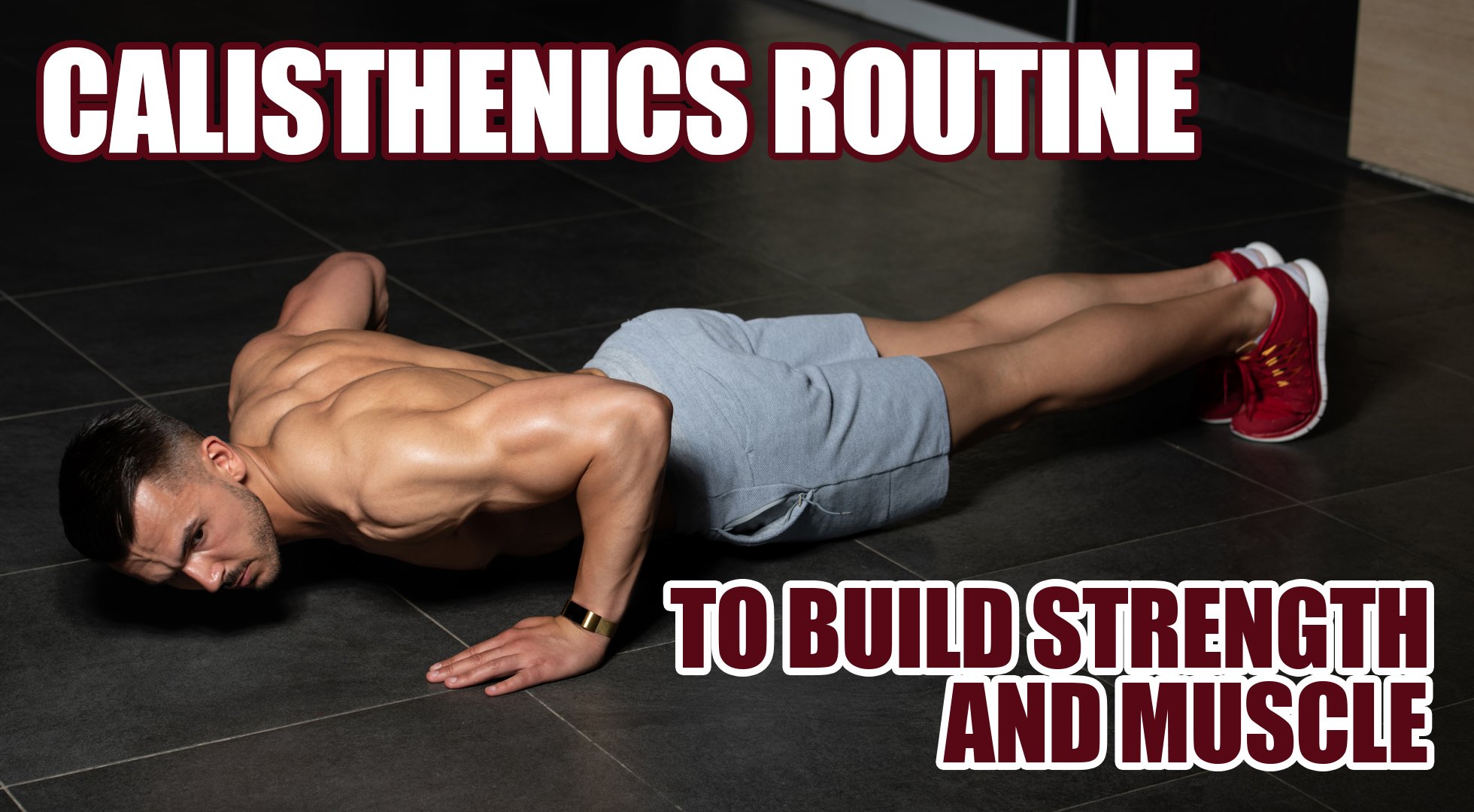
Calisthenics routines offer a powerful way to build strength, muscle, and endurance using nothing but your body weight. You can perform these exercises anywhere – at home, in a park, or while traveling – making them one of the most accessible forms of fitness training available.
A well-designed calisthenics routine targets all major muscle groups through seven movement patterns: horizontal pushing, vertical pushing, horizontal pulling, vertical pulling, squats, lunges, and hip hinges. This approach ensures you develop balanced strength throughout your entire body without needing expensive gym equipment or weights.
The beauty of calisthenics lies in its scalability. Whether you’re a complete beginner struggling with your first push-up or an advanced athlete working toward one-arm handstand push-ups, you can adjust exercise difficulty through progressions and variations. This adaptability means your routine can grow with you as you get stronger.
Key Takeaways
- Calisthenics routines use your body weight to build strength and muscle without requiring any equipment
- Effective programs include seven movement patterns to ensure balanced development of all muscle groups
- Exercise progressions allow you to continuously challenge yourself and advance from beginner to advanced levels
What Is a Calisthenics Routine?
A calisthenics routine uses your body weight to build strength and muscle through structured exercises. It differs from typical gym training by relying on gravity and your own resistance instead of weights or machines.
Definition and Key Principles
Calisthenics is strength training that uses your body weight as resistance. The word comes from Greek terms meaning “beauty” and “strength.”
Core principles of calisthenics include:
- Progressive overload through harder exercise variations
- Functional movement patterns that improve real-world strength
- Minimal equipment requirements
- Scalable difficulty from beginner to advanced levels
You can perform bodyweight exercises anywhere without gym equipment. Basic moves like push-ups and squats form the foundation. Advanced practitioners progress to complex skills like muscle-ups and handstand push-ups. The key is gradually increasing difficulty through lever changes and movement variations rather than adding weight plates.
Calisthenics Versus Traditional Strength Training
Traditional strength training relies on external weights like barbells and dumbbells. Calisthenics uses only your body weight for resistance.
Key differences include:
| Calisthenics | Weight Training |
|---|---|
| Body weight resistance | External weight resistance |
| Minimal equipment | Requires gym equipment |
| Movement-based progression | Weight-based progression |
| Full-body integration | Often isolates muscle groups |
Weight training lets you easily add more resistance by increasing load. Calisthenics requires creativity to progress through exercise variations and leverage changes.
Both methods build strength effectively. Calisthenics emphasizes functional movement patterns while traditional training offers precise load control for specific muscle development.
Simple Calisthenics Routine for Beginners
The routine below is perfect for beginners and can be done in the comfort of your home. Start with 2 to 3 sets of each exercise and around 8 to 12 repetitions (hold the plank for 15 to 30 seconds). Aim to complete the workout 3 times per week, with rest days in between.
1. Bodyweight Squat
- Stand with feet shoulder-width apart, toes slightly out.
- Keep your chest up and core tight.
- Bend your knees and push your hips back as if sitting in a chair.
- Lower down until thighs are parallel to the floor (or as low as comfortable).
- Press through your heels to stand back up.
2. Incline Push-Up (hands on a bench, table, or wall)
- Place your hands on an elevated surface, shoulder-width apart.
- Step your feet back until your body forms a straight line from head to heels.
- Bend your elbows and lower your chest toward the surface.
- Push back up to the starting position.
3. Glute Bridge
- Lie on your back with knees bent, feet flat on the floor hip-width apart.
- Place your arms at your sides, palms down.
- Press through your heels and lift your hips toward the ceiling.
- Squeeze your glutes at the top, then slowly lower back down.
4. Knee Push-Up
Start on hands and knees, hands slightly wider than shoulder-width.
- Keep your body straight from head to knees.
- Bend your elbows and lower your chest toward the floor.
- Push back up to the starting position.
5. Reverse Lunge
- Stand tall with feet hip-width apart.
- Step one foot back and lower your body until both knees are bent at 90 degrees.
- Keep your front knee stacked above your ankle.
- Push through your front heel to return to standing.
- Repeat on the other side.
6. Plank (Knee or Full)
- Place your forearms on the floor, elbows under shoulders.
- Extend your legs behind you (or keep knees on the ground for easier version).
- Keep your body in a straight line from head to heels (or head to knees).
- Engage your core and hold the position for time.
Fundamentals of Calisthenics Training
Building strength through calisthenics requires mastering proper muscle activation patterns, understanding core movement sequences, and applying systematic progression methods. These three pillars form the foundation for effective bodyweight training that builds both strength and coordination.
Foundational Strength and Muscle Activation
Foundational strength starts with your ability to control your own bodyweight through basic movement patterns. Your muscles must learn to work together as a system rather than in isolation.
Core stabilization forms the base of all calisthenics movements. You need strong abdominal muscles, lower back muscles, and deep stabilizers to maintain proper body alignment during exercises like push-ups and pull-ups.
Muscle activation in calisthenics differs from weight training because multiple muscle groups must coordinate simultaneously. During a push-up, your chest, shoulders, triceps, core, and legs all engage to maintain proper form.
Start with exercises that teach proper activation patterns:
- Planks for core stability
- Wall sits for leg strength
- Dead hangs for grip and shoulder stability
Your nervous system needs time to develop these coordination patterns. Focus on holding positions and controlling movements before adding complexity or speed.
Movement Patterns in Calisthenics
Calisthenics training revolves around seven fundamental movement patterns that form the basis of all bodyweight exercises. These patterns train your body to move efficiently through space.
Pushing movements include push-ups, dips, and handstand push-ups. These exercises work your chest, shoulders, and triceps while requiring core stability.
Pulling movements like pull-ups, rows, and muscle-ups target your back, biceps, and rear deltoids. These balance the pushing movements and prevent muscle imbalances.
Squatting patterns develop leg strength through bodyweight squats, lunges, and single-leg variations. These movements build functional lower body power.
Hinge movements such as single-leg deadlifts teach proper hip mobility and posterior chain activation. This pattern is crucial for injury prevention.
The remaining patterns include core stabilization, locomotion (crawling, bear walks), and rotation (Russian twists, side planks). Master these basic patterns before attempting advanced skills.
Progressive Overload in Calisthenics
Progressive overload in calisthenics requires creative approaches since you cannot simply add weight plates. Your body weight remains constant, so you must manipulate other variables to increase difficulty.
Leverage changes provide the primary method for progression. Moving from regular push-ups to diamond push-ups to archer push-ups increases difficulty by changing the mechanical advantage.
Tempo manipulation offers another progression tool. Slow down the lowering phase of movements or add pauses at challenging positions to increase time under tension.
Volume progression works through increased repetitions and sets. If you can perform 10 push-ups easily, progress to 15, then 20, building muscular endurance alongside strength.
Range of motion adjustments add difficulty. Elevating your feet during push-ups or performing deficit push-ups increases the challenge without changing the basic movement pattern.
Combine these methods systematically. Start with volume increases, then modify leverage or tempo when higher repetitions become less effective for strength gains.
Essential Bodyweight Exercises
Master these fundamental movement patterns to build strength throughout your entire body. Push-ups and their variations develop upper body pressing power, while pull exercises like chin-ups create balanced muscle development, and squats with lunges form the foundation of lower body strength.
Push Variations: Push-Up and Progressions
Push-ups target your chest, shoulders, and triceps while strengthening your core. Start with knee push-ups if you’re new to exercise. Place your knees on the ground and maintain a straight line from knees to head. Lower your chest toward the floor and push back up.
Incline push-ups offer another beginner option. Place your hands on a chair, bench, or wall. The higher your hands, the easier the exercise becomes.
Standard push-ups require a straight body line from head to heels. Keep your core tight and lower until your chest nearly touches the ground.
Pike push-ups shift focus to your shoulders. Start in downward dog position and lower your head toward the floor by bending your elbows.
For tricep emphasis, try chair dips or bench dips. Sit on the edge with hands beside your hips. Lower your body by bending your elbows, then push back up.
Pull Variations: Chin-Up, Inverted Row, and More
Pull exercises balance your pushing movements and prevent muscle imbalances. Chin-ups work your back, biceps, and grip strength. Hang from a bar with palms facing you. Pull your body up until your chin clears the bar. Lower with control.
Inverted rows or Australian pull-ups provide a scaled option. Lie under a sturdy table or low bar. Pull your chest toward the surface while keeping your body straight. These exercises strengthen your upper back and improve posture. Start with feet closer to the anchor point for easier difficulty. Progress by moving your feet further away or elevating them on a chair. This increases the load on your pulling muscles.
Squat and Lunge Variations
Squats build your quadriceps, hamstrings, and glutes. Stand with feet shoulder-width apart. Lower by bending at hips and knees while keeping your chest up.
Split squats work one leg at a time. Step one foot back and lower into a lunge position. Push through your front heel to return up.
Bulgarian split squats increase difficulty by placing your rear foot on a chair. This creates more load on your working leg.
Lunges can be performed stationary or walking. Stationary lunges keep you in one spot. Walking lunges add forward movement and coordination challenges.
Pistol squats represent the advanced single-leg squat. Balance on one leg while extending the other forward. Lower down and stand back up using only one leg.
Building Your Calisthenics Routine
Creating an effective calisthenics workout routine requires smart planning that matches your fitness level and balances different movement patterns. The key is choosing the right workout structure and exercise progressions while ensuring you train all major muscle groups evenly.
Structuring Workouts for All Levels
Your calisthenics workout plan should match your current fitness level and available training time. Beginners should start with full-body workouts three times per week, allowing at least one rest day between sessions.
A typical beginner structure includes:
- Monday: Full body routine
- Wednesday: Full body routine
- Friday: Full body routine
Each workout should last 30-45 minutes. Focus on 4-6 exercises total, performing 2-3 sets of each movement.
Intermediate trainees can handle more volume with an upper/lower split four times per week. This allows you to target specific muscle groups with higher volume while still maintaining proper recovery.
Advanced practitioners often use push/pull/legs splits 5-6 times per week. This structure requires excellent recovery habits and consistent training experience. Start conservatively with your calisthenics routine. You can always add more training days as your body adapts and recovers better.
Choosing the Right Exercise Progressions
Progressive overload drives strength gains in calisthenics. You must gradually make exercises harder over time to continue building muscle and strength.
Four main ways to progress:
- Add repetitions – Increase reps by 1-2 each week
- Add sets – Include an extra set when you can complete all current sets
- Advance the movement – Move to harder exercise variations
- Slow the tempo – Take 3-4 seconds to lower yourself during push-ups or pull-ups
For push-ups, your progression might look like: wall push-ups → incline push-ups → standard push-ups → decline push-ups → one-arm push-ups.
Track your workouts in a notebook or app. Write down sets, reps, and which exercise variation you used. This helps you see progress and plan your next workout.
Never sacrifice form for harder progressions. Master each movement before advancing to the next level.
Balancing Push, Pull, Legs, and Core Movements
Your calisthenics workout routine must include all four movement patterns to build balanced strength and prevent muscle imbalances.
Essential movement patterns:
| Movement Type | Primary Muscles | Example Exercises |
|---|---|---|
| Push | Chest, shoulders, triceps | Push-ups, dips, pike push-ups |
| Pull | Back, biceps | Pull-ups, rows, chin-ups |
| Legs | Quads, glutes, hamstrings | Squats, lunges, single-leg squats |
| Core | Abs, obliques | Planks, hollow holds, leg raises |
Include at least one exercise from each category in every full-body workout. For split routines, make sure you train each pattern 2-3 times per week. Many people skip pulling exercises because they are harder to do at home. Use a doorway pull-up bar, resistance bands, or even a sturdy table for bodyweight rows.
Core training often gets overlooked, but it supports all other movements. Strong abs and back muscles improve your push-ups, pull-ups, and squats. Your legs contain the largest muscles in your body. Do not neglect squats and lunges even if your main goal is upper body strength.
Core Exercises and Stability Movements
Core strength forms the foundation of all calisthenics movements and provides stability for advanced exercises. Static holds like planks build endurance, while dynamic movements like mountain climbers challenge your core through motion.
Plank and Side Plank Techniques
Standard Plank Form Position your forearms on the ground with elbows directly under your shoulders. Keep your body in a straight line from head to heels.
Engage your core by bracing as if someone might tap your stomach. Avoid letting your hips sag or rise too high.
Start with 30-second holds and build up to one minute or longer. Focus on steady breathing throughout the exercise.
Side Plank Progression Lie on your side with your forearm on the ground. Lift your hips to create a straight line from head to feet.
Your obliques work harder during side planks than regular planks. Keep your top arm on your hip or extend it toward the ceiling.
Hold for 20-30 seconds on each side initially. Progress by adding leg lifts or reaching your top arm under your body.
Leg Raise, Flutter Kick, and Core Challenges
Leg Raise Technique Lie flat on your back with your hands at your sides. Keep your legs straight and lift them until they form a 90-degree angle with your torso.
Lower your legs slowly without letting them touch the ground. This targets your lower abs more than crunches do.
Hanging Knee Raise Variation If you have access to a pull-up bar, hanging knee raises add extra challenge. Pull your knees toward your chest while hanging.
Avoid swinging your body. Control the movement by engaging your core throughout.
Flutter Kicks Keep your lower back pressed to the floor. Alternate lifting each leg in small, quick movements.
Perform flutter kicks for 20-30 seconds. Your hip flexors and lower abs work together during this exercise.
Dynamic Stability: Mountain Climber and Russian Twist
Mountain Climber Form Start in a high plank position with your wrists under your shoulders. Drive one knee toward your chest while keeping your back straight.
Quickly switch legs like you’re running in place. Your core must stabilize your body while your legs move.
Russian Twist Execution Sit with your knees bent and lean back slightly. Twist your torso from side to side while keeping your core engaged.
You can keep your feet on the ground or lift them for extra difficulty. Focus on controlled rotation rather than speed.
Benefits of Dynamic Core Work These moving exercises improve your ability to maintain stability during motion. They also raise your heart rate more than static holds.
Mountain climbers combine cardio with core strength. Russian twists target your obliques through rotational movement.
Advanced Calisthenics Skills and Progressions
Advanced calisthenics skills require systematic progression through increasingly challenging static holds, explosive movements, and complex unilateral variations. These skills demand exceptional strength-to-weight ratios and precise body control developed through dedicated practice.
Handstand Variations and Holds
The handstand hold forms the foundation for all inverted skills in advanced calisthenics. Start with wall-assisted holds, keeping your shoulders stacked directly over your wrists.
Progress to freestanding handstand holds by practicing away from the wall for 10-15 seconds. Focus on finger pressure adjustments to maintain balance.
The handstand push-up represents the next progression level. Begin with wall-assisted handstand push-ups, lowering your head to the ground and pressing back up.
Advanced practitioners can attempt freestanding handstand push-ups. These require exceptional shoulder strength and balance control.
Handstand Progression Steps:
- Wall handstand hold (30-60 seconds)
- Chest-to-wall handstand (focus on alignment)
- Freestanding handstand (10+ seconds)
- Wall handstand push-ups (5-10 reps)
- Freestanding handstand push-ups (1-5 reps)
Explosive and Unilateral Movements
Explosive movements develop power and coordination beyond basic strength training. The burpee provides an excellent foundation, combining multiple movement patterns.
Progress to muscle-ups, which require explosive pulling power to transition from pull-up to dip position. Practice high pull-ups first to build the necessary strength.
Ring dips challenge stability and strength simultaneously. The unstable rings force your muscles to work harder than parallel bars.
Single-arm variations represent the ultimate unilateral challenge. One-arm push-ups and pull-ups require exceptional strength and balance.
Key Explosive Progressions:
- High pull-ups (chest to bar)
- Kipping muscle-ups
- Strict muscle-ups
- Explosive push-ups (hands leave ground)
- Single-arm push-ups
Skill Training: Front Lever, Superman, and Beyond
The front lever develops pulling strength and core stability through horizontal body positioning. Begin with tuck front lever holds, keeping knees tucked to chest.
Progress through advanced tuck, single-leg, and straddle variations. Each step increases leverage and difficulty significantly.
The superman exercise builds posterior chain strength essential for back levers and bridges. Lie prone and lift your chest and legs simultaneously.
The glute bridge provides foundational strength for advanced bridge variations. Progress to single-leg glute bridges and glute kickbacks for unilateral development.
Hip hinge movements prepare your body for complex lever positions. Master the movement pattern before attempting advanced skills.
Front Lever Progression:
- Tuck front lever (10-20 seconds)
- Advanced tuck (knees at 90 degrees)
- Single-leg front lever
- Straddle front lever
- Full front lever (5+ seconds)
Optimizing Results and Recovery
Recovery is where your muscles actually grow and get stronger, while smart progress tracking ensures you continue building muscle definition over time. Active recovery methods help your body repair itself between workouts while proper mobility work prevents injuries that could derail your progress.
Active Recovery Strategies
Active recovery keeps blood flowing to your muscles without adding stress to your body. This helps you build muscle faster than just sitting still on rest days.
Light movement speeds up recovery better than complete rest. Try 10-15 minutes of walking, easy cycling, or gentle yoga on your off days.
Foam rolling breaks up tight spots in your muscles. Roll each muscle group for 30-60 seconds, focusing on areas that feel stiff or sore.
Dynamic stretching keeps your joints moving smoothly. Arm circles, leg swings, and torso twists work well for 5-10 minutes.
Sleep is your most powerful recovery tool. Your body releases growth hormone during deep sleep, which directly helps muscle definition improve.
Aim for 7-9 hours each night. Keep your room cool and dark. Avoid screens for one hour before bed to help your body prepare for rest.
Injury Prevention and Mobility
Good mobility keeps you training consistently, which is key for building muscle over time. Tight muscles and stiff joints lead to poor form and injuries.
Warm up properly before every session. Spend 5-10 minutes on movements that match your workout. Do arm circles before pull-ups or bodyweight squats before pistol squats.
Cool down after training with static stretches. Hold each stretch for 20-30 seconds when your muscles are warm.
Focus on these problem areas for calisthenics:
- Shoulders: Door frame stretches and wall slides
- Hip flexors: Couch stretch and low lunges
- Thoracic spine: Cat-cow stretches and foam rolling
- Ankles: Calf stretches and ankle circles
Listen to your body’s warning signs. Persistent soreness, sharp pains, or feeling overly tired means you need more rest.
Tracking Progress and Adjusting Intensity
Tracking your workouts shows you exactly how your muscle definition and strength improve over time. Without data, you might train too hard or too easy.
Log these key metrics for each exercise:
- Reps completed
- Sets performed
- Rest time between sets
- Difficulty level (beginner to advanced variations)
Weekly progress photos show muscle definition changes better than the mirror. Take them in the same lighting and pose each time.
Adjust intensity based on your recovery. If you feel strong and recovered, add reps or try harder variations. If you feel tired or sore, reduce volume or take an extra rest day.
Progressive overload drives muscle growth. Increase difficulty every 2-3 weeks by adding reps, sets, or moving to harder exercise variations.
Your grip strength, energy levels, and sleep quality tell you if you’re recovering well. Poor recovery means you need to reduce training volume temporarily.
Frequently Asked Questions
Starting your calisthenics journey brings up many common questions about workout structure, exercise selection, and progression timing. These answers cover everything from beginner workout plans to muscle growth strategies and home exercise options.
What does a beginner calisthenics workout plan entail?
A beginner calisthenics workout plan focuses on building a solid foundation with basic bodyweight exercises. You’ll start with movements like push-ups, squats, planks, and assisted pull-ups. Your first 4 weeks should emphasize proper form over high repetitions. Begin with 2-3 workout sessions per week to allow your body time to recover.
Each session should include 3-5 exercises targeting different muscle groups. Start with 2-3 sets of 5-12 repetitions for each exercise, depending on your current fitness level. Focus on mastering basic movements before advancing to harder variations. This approach prevents injury and builds the strength needed for more complex exercises later.
How can I structure a calisthenics routine for optimal muscle growth?
Structure your calisthenics routine around compound movements that work multiple muscle groups simultaneously. Include push exercises like push-ups, pull exercises like pull-ups, and lower body movements like squats. Train each muscle group 2-3 times per week for optimal growth. Allow at least 48 hours of rest between training the same muscle groups.
Progressive overload is key for muscle growth. Increase difficulty by adding more repetitions, sets, or advancing to harder exercise variations. Organize your workouts in a circuit or straight-set format. Circuits work well for beginners, while straight sets allow for better focus on form and strength development.
What are essential exercises to include in a calisthenics workout at home?
Push-ups are essential for building chest, shoulder, and tricep strength. Start with knee push-ups if standard push-ups are too difficult.
Squats target your legs and glutes effectively. Focus on proper form by keeping your chest up and weight in your heels.
Planks strengthen your entire core and improve stability. Hold for 30 seconds to start, gradually increasing duration as you get stronger.
Pull-ups or inverted rows work your back and biceps. Use a doorway pull-up bar or find a sturdy horizontal surface for rows.
Lunges add single-leg strength and improve balance. Step forward into a lunge position, keeping your front knee over your ankle.
Mountain climbers provide cardio benefits while strengthening your core and shoulders. Maintain a plank position while alternating knee drives to your chest.
Can you outline an effective 30-day workout plan for someone new to calisthenics?
Week 1-2 focuses on learning proper form with basic exercises. Perform 2-3 workouts per week with push-ups, squats, planks, and assisted pull-ups.
Start with 2 sets of 8-12 repetitions for each exercise. Hold planks for 20-30 seconds initially.
Week 3-4 increases volume and intensity. Add a third set to each exercise and aim for higher repetition ranges.
Introduce exercise variations like incline push-ups or wall sits. This keeps your muscles challenged as they adapt. By day 30, you should notice improved strength and endurance. You’ll be ready to progress to more challenging variations and longer workout sessions.
Rest days are crucial during your first month. Take at least one full rest day between workout sessions to allow proper recovery.
What resources or apps offer the best calisthenics workout plans?
Many fitness apps provide structured calisthenics programs with video demonstrations and progress tracking. Look for apps that offer beginner-friendly progressions and clear exercise instructions. YouTube channels dedicated to calisthenics offer free workout routines and technique tutorials. Choose channels run by certified trainers or experienced practitioners.
Online calisthenics communities provide workout plans and support from other practitioners. These platforms often share proven routines and answer specific questions. Fitness websites frequently publish detailed calisthenics programs with progression charts. Look for sites that explain proper form and provide modification options.
Books on calisthenics training offer comprehensive programs and exercise libraries. They provide structured approaches to long-term progress and skill development.
How often should I update my calisthenics routine for continued progress?
Update your routine every 4-6 weeks to prevent plateaus and maintain progress. Your muscles adapt to exercises over time, requiring new challenges for continued growth. Increase difficulty by progressing to harder exercise variations rather than just adding repetitions. Move from regular push-ups to diamond push-ups, then to one-arm push-ups.
Add new exercises that target the same muscle groups differently. This approach keeps your workouts fresh and challenges your muscles from various angles. Listen to your body’s response to determine when changes are needed. If exercises become too easy or you stop seeing progress, it’s time to advance.
Track your performance to identify when you’ve mastered current exercises. Once you can complete your target repetitions with good form, progress to the next level.
